American Physical Society
American Physical Society Sites|APS|Journals|PhysicsCentral|Physics
 
Login| Become a Member|Contact Us
  • Publications
    • Journals of the American Physical Society
    • APS News
    • Physics
    • Physics Today
    • Capitol Hill Quarterly
    • Other APS Publications
    • Reciprocal Society Newsletters
  • Meetings & Events
    • March Meeting
    • April Meeting
    • Meeting Calendar
    • Abstract Submission
    • Archives of the Bulletin of the American Physical Society
    • Policies & Guidelines
    • Meeting Presentations
    • Virtual Press Rooms
  • Programs
    • Education
    • International Affairs
    • Physics Outreach
    • Women in Physics
    • Minorities in Physics
    • Prizes, Awards & Fellows
  • Membership
    • Join APS
    • Renew Membership
    • Member Directory
    • My Member Profile
    • Member Services
    • APS Units
  • Policy & Advocacy
    • Issues
    • Reports & Studies
    • APS Statements
    • Advocacy Tools
    • Advocacy Resources
    • Fellowships & Fellows
    • Contact APS Public Affairs
  • Careers In Physics
    • Physics Jobs
    • Becoming a Physicist
    • Career Guidance
    • Physics Careers Statistical Data
  • About APS
    • Mission Statement
    • Society Governance
    • Society History
    • Donate to APS
    • APS Jobs
    • Contact Us
Programs
  • Education
  • International Affairs
  • Physics Outreach
  • Women in Physics
  • Minorities in Physics
  • Prizes, Awards & Fellows
    • Prizes
    • Awards, Medals & Lectureships
    • Dissertation Awards
    • APS Fellows
    • Other APS Scholarships, Lectureships & Fellowships

Email Email   Print Print     Share Share
 
Home   |   Programs   |   Prizes, Awards and Fellowships   |   Prizes   |   Prize Recipient

Prize Recipient


Dyson

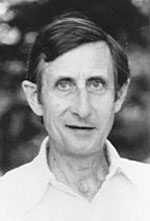
Freeman John Dyson
Institute for Advanced Study

Citation:

"For his thoughtful, elegant and widely published writings regarding the impact of diverse science and technology developments on critical societal issues and on fundamental questions for humankind."

Background:

Dr. Dyson is now retired, having been for most of his life a professor of physics at the Institute of Advanced Study in Princeton. He was born in England and worked as a civilian scientist for the Royal Air Force in World War II. He graduated from Cambridge University in 1945 with a B.A. degree in mathematics. He went to Cornell University as a graduate student in 1947 and worked wih Hans Bethe and Richard Feynman. His most useful contribution to science was the unification of the three versions of quantum electrodynamics invented by Feynman, Schwinger and Tomonaga. Cornell University made him a professor without bothering about his lack of a Ph.D. He subsequently worked on nuclear reactors, solid-state physics, ferromagnetism, astrophysics and biology, looking for problems where elegant mathematics could be usefully applied.

Dr. Dyson has written a number of books about science for the general public, beginning with Disturbing the Universe in 1979. The most recent is, The Sun, the Genome and the Internet, which will be published in 1999. He is a Fellow of the APS, a member of the National Academy of Science, and a fellow of the Royal Society of London.


Selection Committee:

Mark Sakitt (Chair), Ralph A. Alpher, Thomas L. Neff ('97 Forum Recipient), Beverly Karplus Hartline (Vice Chair), Philip D. Goldstone

Home | APS Jobs | Media Center | Terms of Use | Site Map

Follow APS: Feeds Facebook LinkedIn Wordpress Twitter Google Plus YouTube

© 2013 American Physical Society